Source Abs Plastic Hair Colouring Trolley for Salon Use
Find and compare 26 abs plastic hair colouring trolley options for salon styling, mobile beauty services, and professional color mixing stations. Review specifications including layer counts, materials, and customization availability to select the right equipment for your business needs; compare the available evidence and request quotations based on your requirements.
Key considerations
Products List


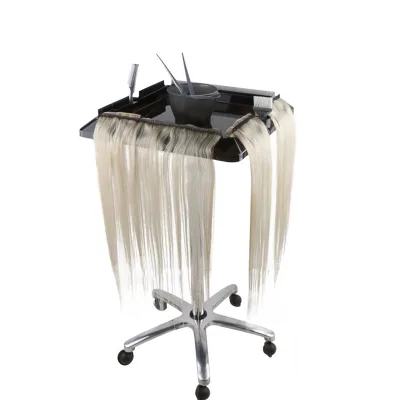
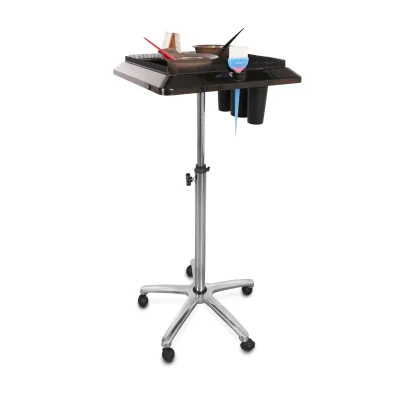
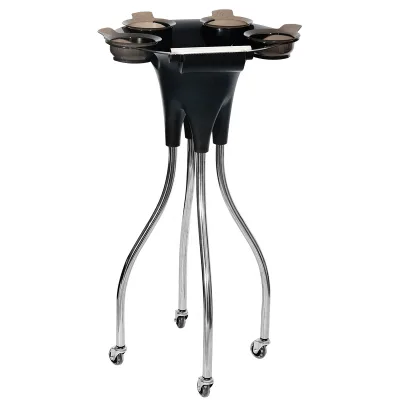


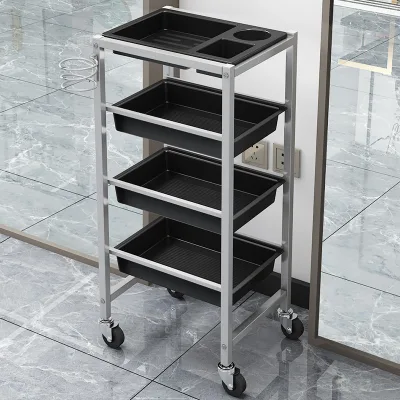

Comprehensive Sourcing Guide
ABS Plastic Hair Colouring Trolley Sourcing Guide
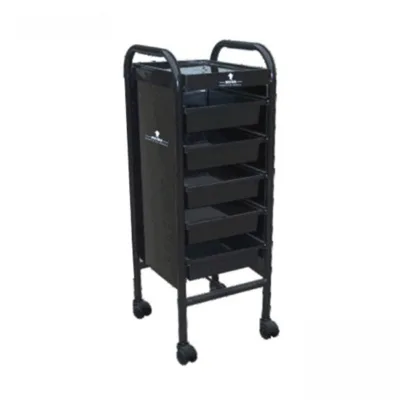
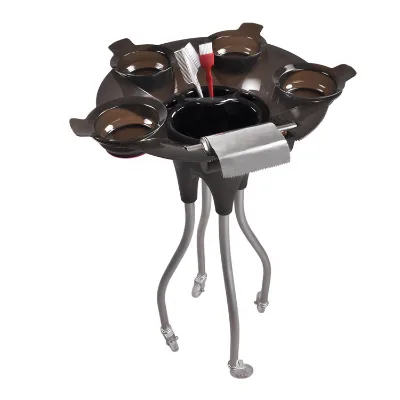
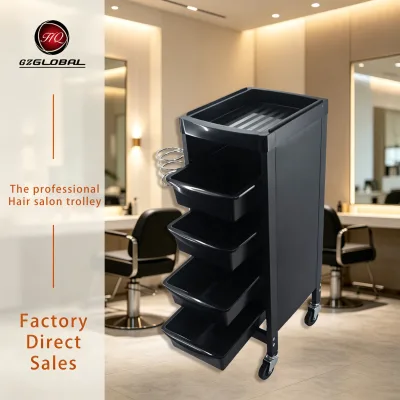
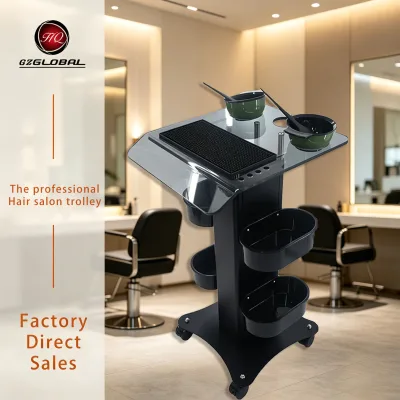
An ABS plastic hair colouring trolley is a fixture buyers typically procure alongside salon chairs and backwash units, since it holds colour bowls, brushes, foils, and styling tools within arm's reach of the stylist. The category in this listing set spans simple multi-tier plastic service trolleys, glass-and-metal beauty trolleys with tempered glass shelves, and metal utility carts, so the keyword should be treated as an entry point into a broader salon trolley family rather than a single product definition. Listings observed here carry model references such as BCS-152, T15, T09, T06, T27, T22, DP-6037, DP-6039, T0150-1, and X11-5, which is useful for building a comparison shortlist before requesting quotations.
Because several observed items are listed as customizable with logo customization available, buyers should treat customization as a standard negotiating point rather than an exception. Condition is uniformly listed as new, and packing is described as carton-based, including standard export packing with cartons for the DP series. Origin is listed as China for the observed products, so freight planning from Chinese ports should be built into the sourcing timeline from the outset.
Product Scope and Observed Listing Signals
The observed listings cluster into three material families. First, plastic trolleys with three to five tiers and four wheels, suited to colouring and general salon service work. Second, a glass beauty trolley type combining tempered glass shelves with painted metal framing, positioned for premium salon interiors, with special medical wheels and an optional lamp noted on one listing. Third, metal utility carts in white or black. Layer counts of three, four, and five appear across the range, which maps directly to how much product and tool inventory a stylist needs at the chair.
Commercial signals in the listings are also instructive. One item lists an MOQ of 10 pieces, while the observed MOQ range across the set runs from 1 to 100 pieces, and the observed price range spans roughly USD 1.58 to 90, reflecting the spread between simple plastic carts and glass-and-metal units. A lead time of 15 to 25 days is stated on at least one listing, and assembly is described as easy to assemble. Buyers should treat these as listing-level observations to confirm per model, not as category-wide guarantees.
Technical Specifications to Verify
Before committing to a model, verify the dimensional stack. Observed package or product standards include 501750, 414437, 832730, 864550, 751842cm, 753241cm, 58.8x43x81cm, 57x41.5x86 CM, 303085cm, and 832540 CM, with one packing size of 835610cm and a carton cube of 0.046 m³. Compare these against your salon workstation footprint and, importantly, against container loading plans, because tall slim trolleys and wide three-tier carts pack very differently.
Confirm the functional hardware next. Wheel specification matters in a salon: one glass model lists special medical wheels, while others simply state four wheels, so ask about caster material, brake availability, and floor protection on hard salon surfaces. Verify shelf load capacity, water and chemical resistance of the ABS or plastic surfaces against hair colour and peroxide spills, and the weight figures where stated, such as 5.2 kg on one model and gross/net weights of 15 kg and 17 kg on another. Clarify whether the listed dimensions are product or package dimensions, since the T27 listing shows both a product standard and a separate package size.
Compliance and Safety Documentation
Chemical contact is the central safety consideration for a colouring trolley, since shelves will routinely hold oxidizing colour products and peroxide. Ask suppliers for material safety documentation confirming what the plastic shelves and trays are made from, and whether surfaces resist staining and degradation from salon chemicals. Do not assume food-grade or medical-grade status; instead, request written confirmation of the material composition and any chemical-resistance testing the factory has performed, and treat undocumented claims as unverified.
Mechanical and shipping safety should also be documented. Request packing specifications showing how the trolley is protected in cartons, since one listing describes standard export packing with cartons and another notes packing with carton, and confirm whether glass shelves, where present, receive additional protective packaging. For the tempered glass and painted metal type, ask what tempering process and edge treatment are applied. Keep logo customization and any applied finishes within documented processes so replacement orders match the approved sample, and file the approved sample reference with your compliance records.
Cost Drivers and Commercial Terms
Price in this category is driven primarily by material and construction. Simple ABS or plastic multi-tier carts sit at the lower end of the observed range, while tempered glass with painted metal frames, special casters, and optional lamps push cost upward. Layer count, wheel specification, and the degree of customization all move the number, so build your quote request around these variables explicitly rather than accepting a single blended price. Weight figures such as 5.2 kg versus 15–17 kg also signal where freight cost will differ materially.
On commercial terms, use the observed signals as negotiation anchors: MOQs from 1 to 100 pieces, an example MOQ of 10 pieces, a stated lead time of 15 to 25 days, and carton-based export packing. Confirm what the quoted price includes — packaging, customization, and whether easy assembly is flat-packed to reduce shipping cube, as suggested by the 0.046 m³ carton figure on one model. Negotiate logo customization costs separately, and clarify Incoterms and payment structure before sample approval so the landed cost is fully visible.
Supplier Qualification and Quality Control
Qualify suppliers against the specific model, not the company profile. Request physical or photographic samples of the exact model number you intend to order, since the observed set includes distinct models with different dimensions and materials. Verify factory capability for the two customization promises common in these listings — logo customization and general customization — by asking which processes are done in-house versus outsourced, because this affects both quality control and lead-time reliability within the 15–25 day window.
For quality control, define an inspection checklist before production: dimension checks against the agreed specification, wheel and brake function, shelf flatness, weld or joint integrity on metal frames, surface finish on painted parts, and carton drop performance for export shipments. For glass models, include a tempered-glass verification step. Agree on the inspection stage — pre-shipment is typical for items at this price point — and specify the acceptable defect criteria in writing. For repeat orders, retain the approved sample and reference it in every purchase order to keep customization consistent across batches.
Long-Term Procurement Checks
Plan for parts and continuity. Casters and wheels are the most commonly replaced components on salon trolleys, so confirm at the outset whether replacement casters can be supplied with future orders, especially for the special medical wheels variant. Also confirm that shelf and tray components can be reordered separately, since a cracked ABS tray should not force replacement of the whole trolley. Ask whether the model will remain in production and what notice the supplier gives before discontinuation.
Finally, build procurement discipline around the listing data you have verified. Record the confirmed dimensions, weights, layer counts, packing sizes, and carton cube for each approved model in an internal specification sheet, and update it after every inspection. Reconfirm lead times and MOQ terms annually or before each seasonal salon refit, as quoted terms observed in listings can change. Track landed cost per unit over time, including any customization charges, so price movements are visible and renegotiations are grounded in documented history rather than listing prices.
FAQs
How many layers do these abs plastic hair colouring trolleys have?
Layer counts vary by model, with listed options including 3 Layers, 4 Layers, and 5 Layers. A 5-layer model suits salons that carry many colour tubes and tools, while 3- or 4-layer units save space. Confirm the layer count per model before ordering, since specifications differ within the same product category.
What is the lead time for an abs plastic hair colouring trolley order?
The listed lead time is 15 to 25 days from order confirmation. This covers customized orders as well, since logo and configuration customization is available. Actual timing can shift with order volume and production scheduling, so confirm the exact date with the supplier before placing a bulk order.
Can the abs plastic hair colouring trolley be customized with a salon logo?
Yes, logo customization is available on supported models. Suppliers can print or apply your brand mark during production, which is useful for salon chains and distributors. Provide artwork files early in the ordering process, and expect the standard 15 to 25 day lead time to apply to customized units.
Which models come with wheels for easy movement?
Listed models include trolleys with 4 wheels, and some metal and glass beauty trolley variants use special medical wheels for smoother, quieter rolling. Wheels matter in busy salons where trolleys move between stations. Check the wheel specification for the specific model you choose, as designs differ across the range.
What packaging is used for shipping these trolleys?
Units ship with carton packing, and some models use standard export packing with cartons for international freight. A listed packing size example is 83 by 56 by 10 centimeters, with a carton volume around 0.046 cubic meters. Carton packaging keeps units protected during container shipping and warehouse handling.
Can I order a small quantity of abs plastic hair colouring trolleys?
Yes, the observed MOQ range starts as low as 1 piece, so small trial orders are possible. One listed model shows an MOQ of 10 pieces, so minimums vary by model. Low MOQ lets salons test quality before committing to larger wholesale quantities, though unit pricing typically improves at higher volumes.
What materials are available for these colouring trolleys?
The range includes plastic trolleys, which are lightweight and easy to clean, and metal trolleys with tempered glass tops and painted metal frames. Glass beauty trolleys offer a premium look for high-end salons, while ABS plastic suits high-traffic environments. Confirm the material of your chosen model before ordering.
How are the trolleys packed and how heavy are they?
One listed metal and glass model weighs 15 to 17 kilograms gross and nets at 15 kilograms, packed at 83 by 56 by 10 centimeters. A lighter plastic model lists 5.2 kilograms. Weight affects freight cost, so verify per-model weights and packing dimensions when calculating shipping for bulk orders.